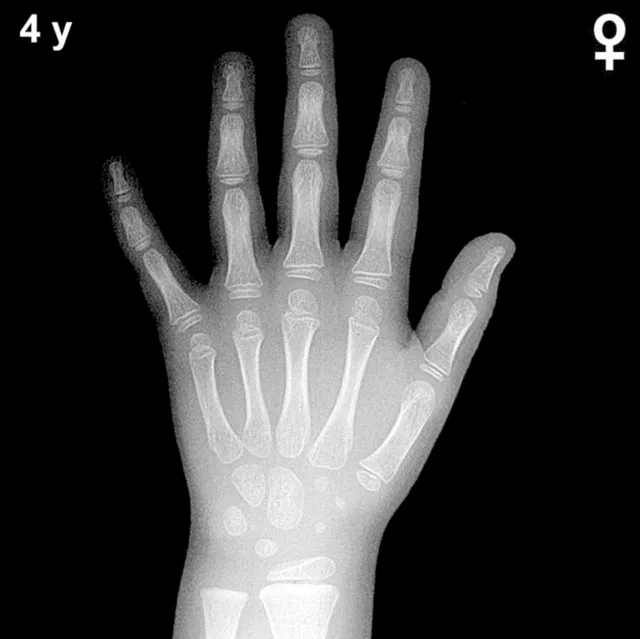
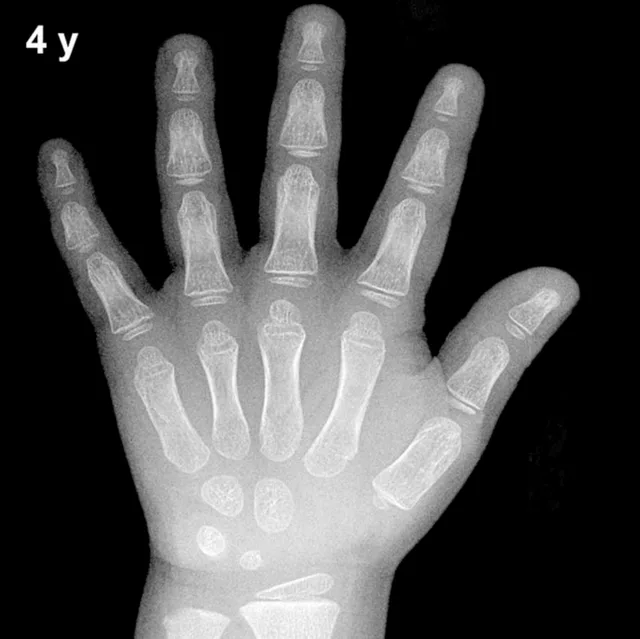
Bone Age in Boys Aged 5 Years — Greulich-Pyle Hand and Wrist X-Ray Reference
Bone age assessment using a left-hand and wrist radiograph is a cornerstone of pediatric endocrine and growth evaluation. The Greulich-Pyle method compares a child's skeletal maturation against standard atlas plates derived from a reference population, allowing clinicians to determine whether skeletal development is concordant with chronological age. In boys aged 5 years, this assessment is particularly relevant in the workup of short stature, growth hormone deficiency, precocious puberty, and hypothyroidism.
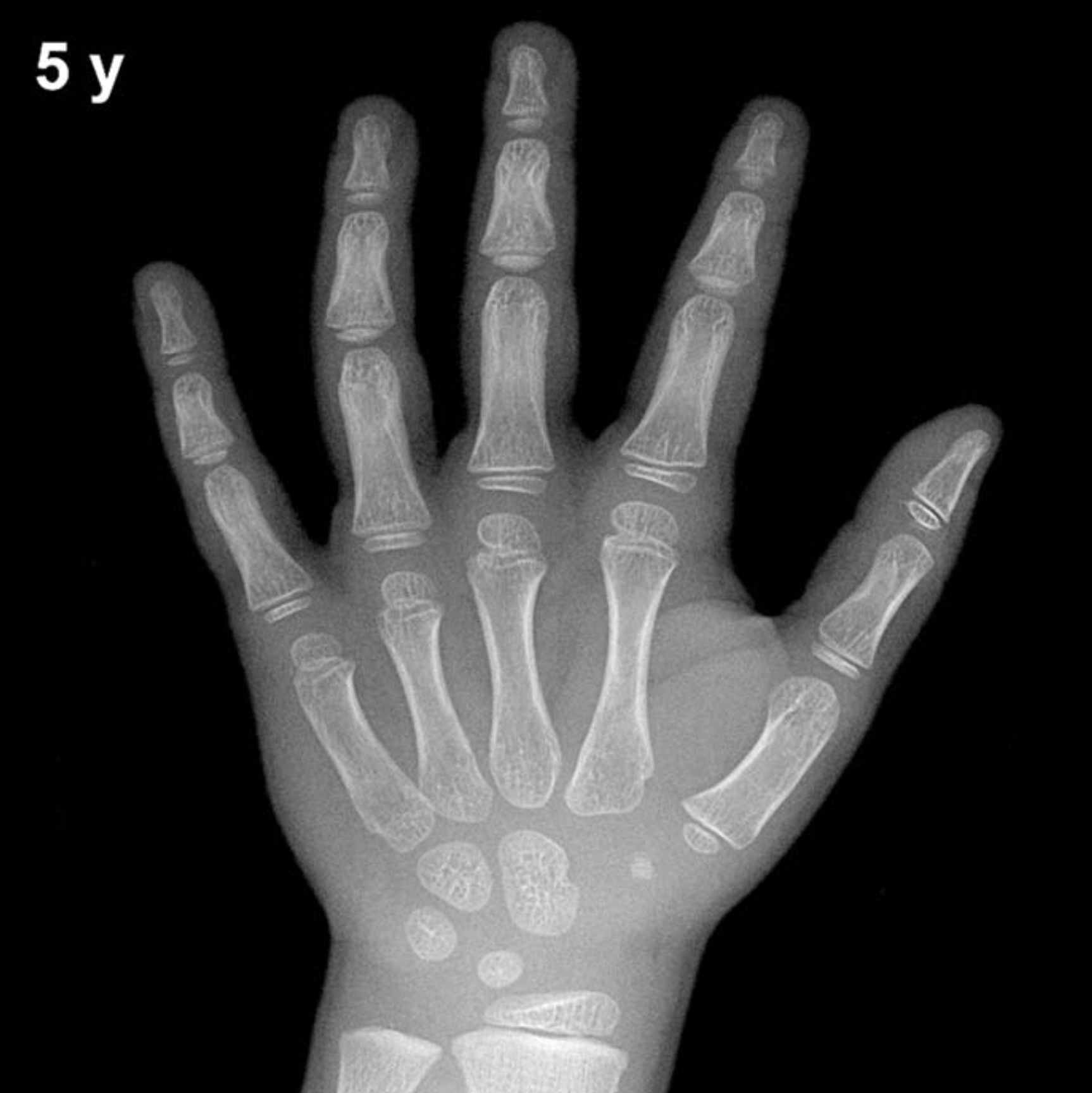
Expected Ossification Centers and Skeletal Findings
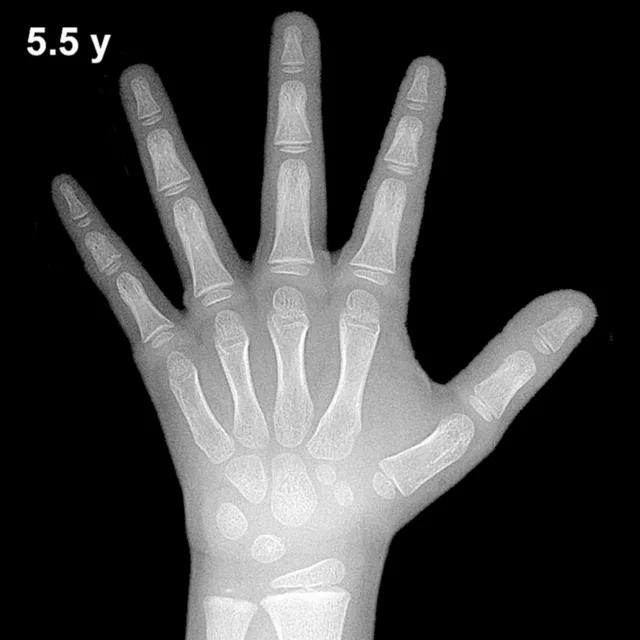
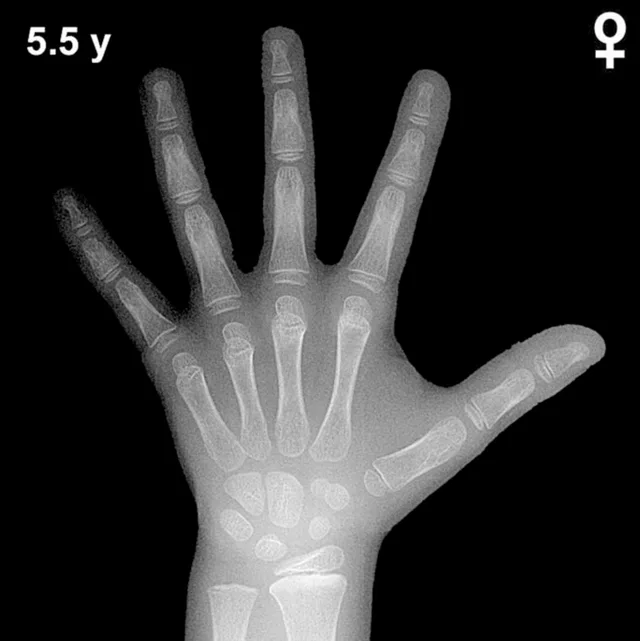
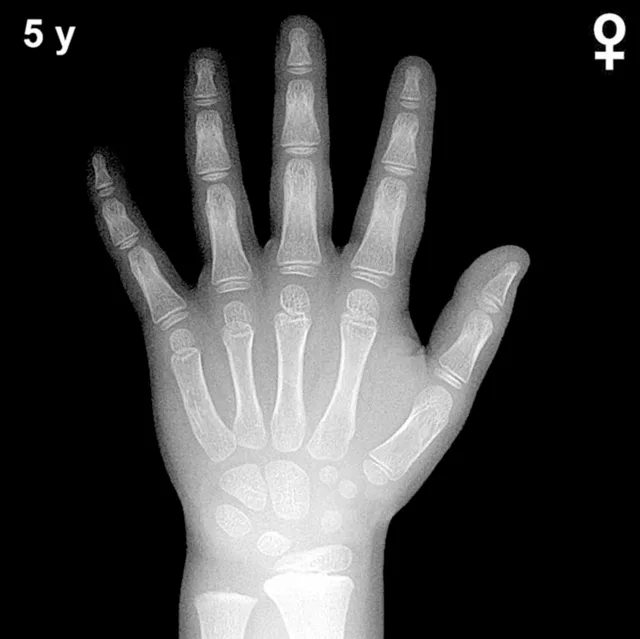
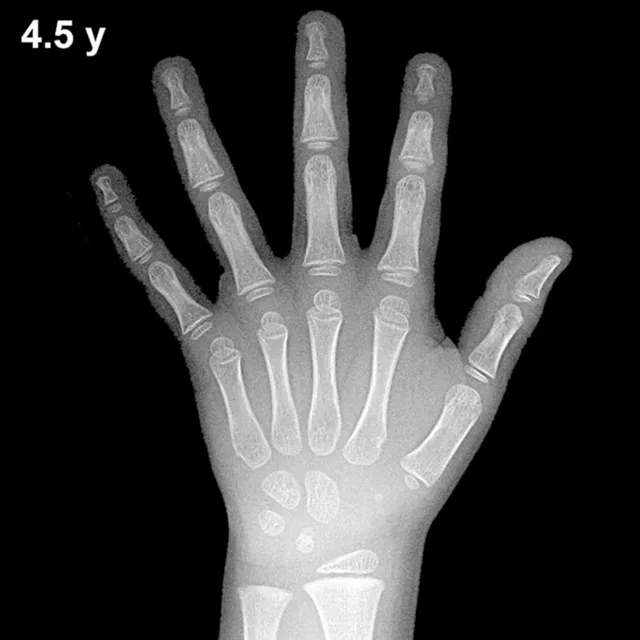
By 5 years of age in boys, several carpal ossification centers are typically well established. The capitate and hamate, the earliest carpal bones to appear (around 3 and 6 months of life, respectively), should be clearly visible and maturing. The triquetral (typically appearing between 2–3 years) and lunate (typically 3–4 years) are expected to be present and of reasonable size by this age. The scaphoid, trapezium, and trapezoid are generally emerging in this 4–6 year window and may be visible in varying degrees of ossification at exactly 5 years in boys.
Epiphyseal development is also notable at this age. The distal radial epiphysis, which typically appears around 1 year of age, should be well-formed and widening. Epiphyses of the metacarpals and phalanges are present and show progressive capping of their respective metaphyses. The distal ulnar epiphysis, which typically appears between 5–7 years, may just be emerging or may not yet be visible in all boys at exactly 5 years — its absence at this age is within normal limits.
- Capitate and hamate: present and maturing
- Triquetral and lunate: expected to be present
- Scaphoid, trapezium, trapezoid: may be emerging
- Distal radial epiphysis: well-formed
- Distal ulnar epiphysis: may or may not be visible
- Pisiform, thumb sesamoid: not yet expected at this age
Clinical Pearls
Skeletal maturation in girls is typically 6–12 months ahead of boys at this age, so the same radiographic appearance in a girl would correspond to a younger bone age standard. A bone age significantly advanced beyond 5 years in a boy may prompt evaluation for precocious puberty or exogenous androgen exposure, whereas a notably delayed bone age raises concern for growth hormone deficiency, hypothyroidism, or constitutional delay of growth and puberty. A key interpretive pitfall is over-reliance on a single carpal bone for age assignment; the Greulich-Pyle method requires a gestalt assessment of all visible ossification centers and epiphyses, not isolated landmarks.
Reference: Greulich WW, Pyle SI. Radiographic Atlas of Skeletal Development of the Hand and Wrist. 2nd ed. Stanford University Press, 1959.